
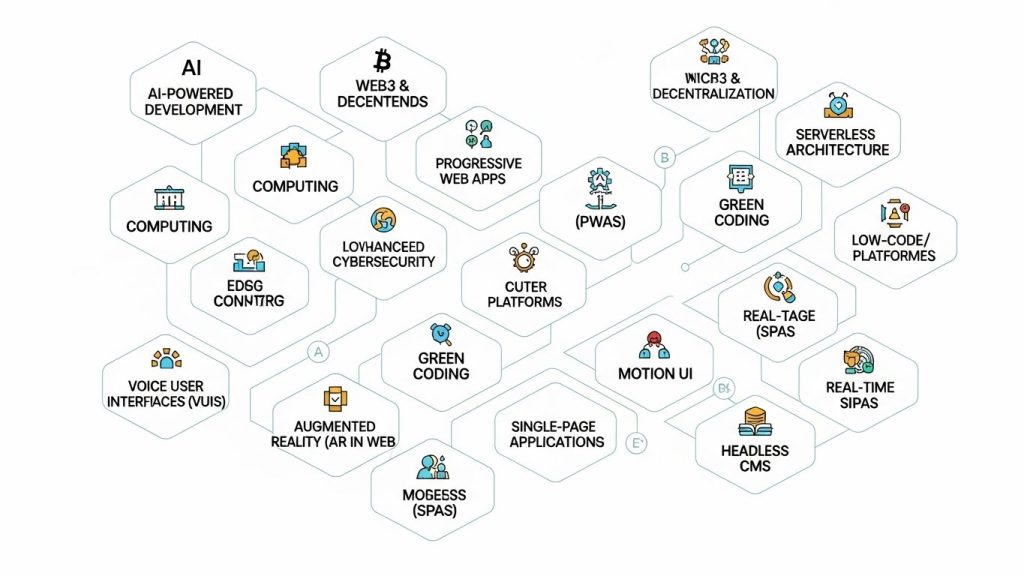
The digital landscape is evolving at an unprecedented pace, and 2025 promises to be a transformative year for web development. As businesses strive to create more engaging, efficient, and user-centric online experiences, understanding emerging trends becomes crucial for staying competitive. Whether you’re a developer, business owner, or digital strategist, these 15 web development trends will shape how we build and interact with websites in 2025.
1. AI-Powered Development and Code Assistance
Artificial intelligence is revolutionizing how developers write code. AI-powered development tools and code assistants are becoming increasingly sophisticated, helping developers write cleaner code faster, debug efficiently, and even generate entire code snippets based on natural language descriptions. This trend is making web development more accessible while simultaneously boosting productivity for experienced developers.
2. Progressive Web Apps (PWAs) Dominance
Progressive Web Apps continue to bridge the gap between web and mobile applications. In 2025, PWAs are expected to become the standard rather than the exception, offering app-like experiences directly through browsers with offline functionality, push notifications, and lightning-fast load times—all without requiring app store downloads.
3. Voice Search Optimization
With voice-activated devices becoming ubiquitous, optimizing websites for voice search is no longer optional. Developers are now focusing on conversational keywords, natural language processing, and structured data to ensure websites appear in voice search results. This trend is reshaping content strategy and technical SEO approaches.
4. WebAssembly (Wasm) Expansion
WebAssembly is gaining significant traction as it enables near-native performance for web applications. In 2025, more developers are leveraging Wasm to run high-performance applications directly in browsers, from complex data visualizations to intensive gaming experiences, without sacrificing speed or efficiency.
5. API-First Development and Headless Architecture
The API-first approach and headless CMS solutions are transforming how websites are built and maintained. This architecture separates the frontend presentation layer from the backend content management, offering greater flexibility, improved performance, and the ability to deliver content across multiple platforms seamlessly.
6. Motion UI and Micro-Interactions
User engagement hinges on creating delightful experiences, and motion UI is at the forefront of this trend. Subtle animations, micro-interactions, and dynamic transitions are becoming essential elements that guide users, provide feedback, and make interfaces feel more intuitive and responsive.
7. Dark Mode as Standard
Dark mode has evolved from a novelty to a user expectation. In 2025, implementing dark mode isn’t just about aesthetics—it’s about reducing eye strain, conserving battery life on mobile devices, and providing users with control over their browsing experience. Modern web development now considers dark mode implementation from the ground up.
8. Serverless Architecture and Edge Computing
Serverless architecture continues to gain momentum, allowing developers to build and deploy applications without managing infrastructure. Combined with edge computing, which processes data closer to users, this trend delivers faster load times, reduced latency, and improved scalability—all while optimizing costs.
9. Enhanced Cybersecurity Measures
With cyber threats becoming more sophisticated, security is paramount in web development. Zero-trust architecture, advanced encryption methods, and proactive security measures are being integrated from the development stage rather than as afterthoughts. Protecting user data and maintaining trust is a top priority for 2025.
10. Single Page Applications (SPAs) Evolution
Single Page Applications powered by frameworks like React, Vue, and Angular continue to dominate the web development landscape. SPAs offer smoother, faster user experiences by loading content dynamically without full page refreshes, creating app-like interactions that users increasingly expect.
11. Low-Code and No-Code Platforms
The rise of low-code and no-code platforms is democratizing web development, enabling non-technical users to create functional websites while allowing developers to focus on more complex challenges. These platforms are becoming more sophisticated, offering greater customization options while maintaining ease of use.
12. Blockchain Integration and Web3
Blockchain technology and Web3 concepts are moving beyond cryptocurrency into mainstream web development. Decentralized applications (dApps), NFT integration, and blockchain-based authentication systems are creating new possibilities for secure, transparent, and user-controlled web experiences.
13. Responsive Design 2.0: Multi-Device Optimization
Responsive design is evolving beyond smartphones and tablets. With the proliferation of smartwatches, foldable devices, and various screen sizes, developers must now create truly fluid designs that adapt seamlessly across an unprecedented range of devices and form factors.
14. Green Web Development and Sustainability
Environmental consciousness is influencing web development practices. Developers are now focusing on creating energy-efficient websites through optimized code, efficient hosting solutions, and reduced data transfer. Green web development isn’t just ethical—it also improves performance and reduces operational costs.
15. Advanced JavaScript Frameworks and TypeScript
JavaScript frameworks continue to evolve with improved performance and developer experience. TypeScript’s adoption is accelerating, offering type safety and better tooling support. These technologies are enabling developers to build more robust, maintainable, and scalable web applications.
Implementing These Trends: A Strategic Approach
Understanding these trends is just the beginning—successful implementation requires expertise and strategic planning. For businesses looking to leverage these cutting-edge technologies, partnering with experienced professionals who understand both current capabilities and future possibilities is essential.
At Peak Media Consulting, we specialize in creating forward-thinking digital solutions that incorporate the latest web development trends. Our comprehensive website development services are designed to help businesses stay ahead of the curve, combining technical excellence with strategic insight to build websites that not only meet today’s standards but are prepared for tomorrow’s innovations.
The Road Ahead
As we navigate through 2025, these web development trends represent more than just technological advancement—they signify a fundamental shift in how we approach digital experiences. From AI integration to sustainable practices, each trend addresses specific user needs while pushing the boundaries of what’s possible on the web.
For deeper insights into emerging digital technologies, Digital Silk’s comprehensive analysis provides additional perspectives on how these trends are reshaping the industry. Additionally, understanding the foundational principles of web development can provide valuable context for how far the field has progressed.
The key to success in 2025 isn’t just adopting every new technology—it’s about strategically selecting the trends that align with your business goals and user needs. As the web continues to evolve, staying informed, adaptable, and user-focused will be the hallmarks of successful digital presence.