
A website RFP is one of the most misunderstood documents in digital projects. Many businesses treat it as a formality, rush through it, or copy a generic template they don’t fully understand. That mistake costs time, money, and momentum. A well-written website RFP, on the other hand, acts as a strategic filter. It attracts the right partners, repels the wrong ones, and sets the foundation for a project that stays on track instead of spiraling into delays and scope creep.
This guide breaks down the website RFP process from a practical, real-world perspective. It explains not only what to include, but why each section matters and how it impacts the quality of proposals you receive. Everything here is written from hands-on experience working with real clients, real budgets, and real constraints.
What a Website RFP Is and Why It Matters
A website RFP, or Request for Proposal, is a structured document used to invite agencies or developers to propose solutions for a website project. It outlines your business context, objectives, requirements, budget expectations, and evaluation criteria so vendors can respond with a tailored proposal rather than a generic sales pitch.
The real value of a website RFP is not the document itself. The value lies in the thinking it forces. Writing a proper RFP requires you to clarify your goals, define success, and confront internal assumptions before any external partner is involved. That clarity directly affects the quality of proposals you receive.
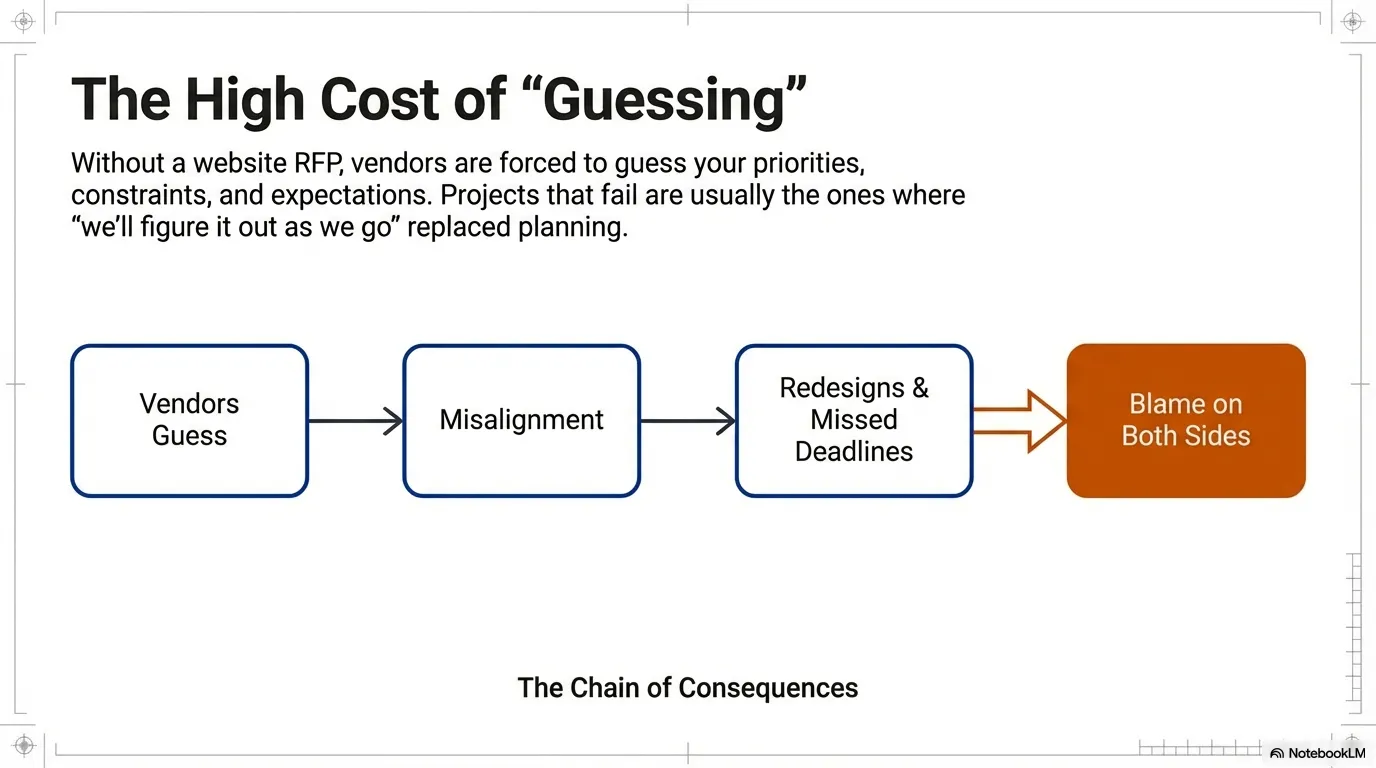
Without a website RFP, vendors guess. They guess your priorities, your constraints, and your expectations. Guessing leads to misalignment. Misalignment leads to redesigns, missed deadlines, and blame on both sides. A strong website RFP reduces guesswork and replaces it with shared understanding.
When You Should Create a Website RFP
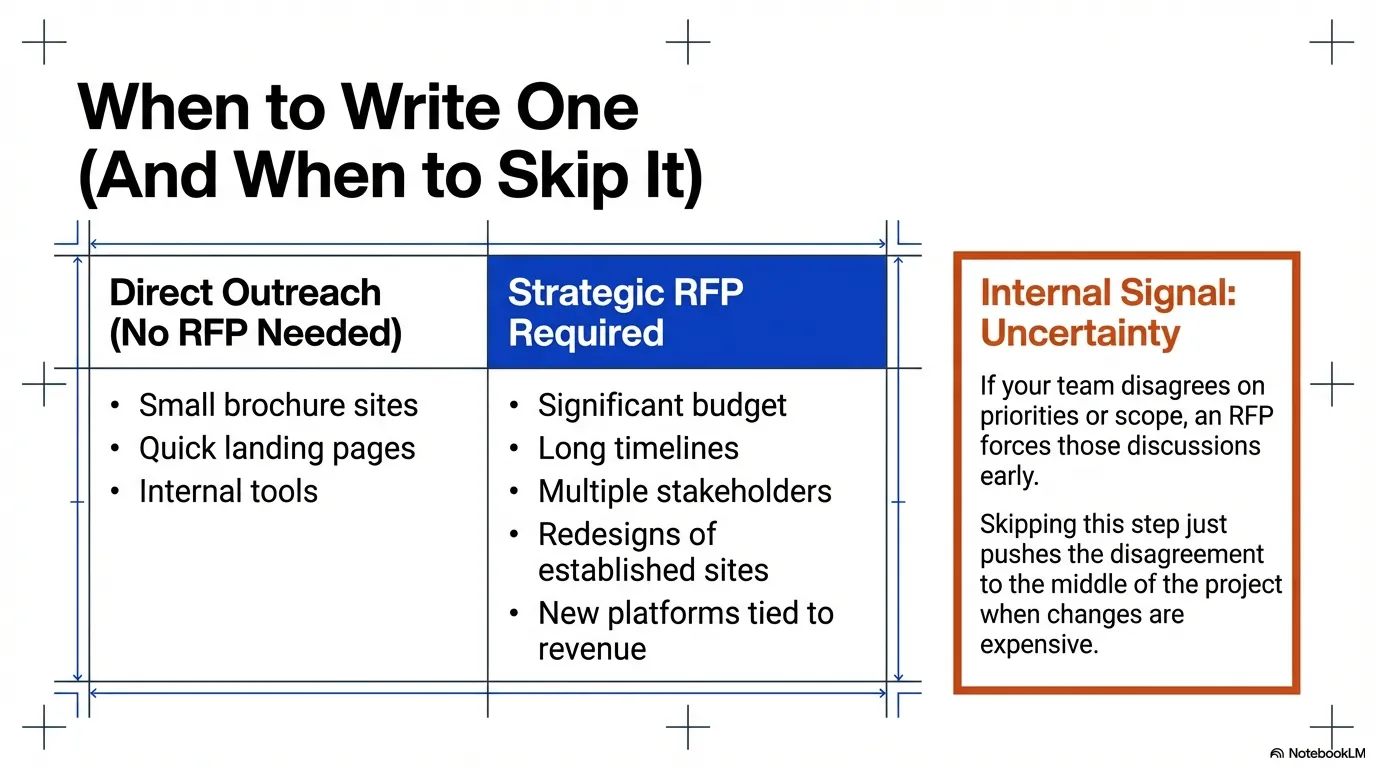
Not every website project needs an RFP. Small brochure sites, quick landing pages, or internal tools can often move faster through direct outreach. A website RFP becomes necessary when the project has meaningful complexity or risk.
You should create a website RFP when the project involves a significant budget, a long timeline, or multiple stakeholders. Redesigns of established websites, new platforms tied to revenue, or development-heavy builds almost always benefit from a formal RFP process.
Another signal is internal uncertainty. If your team disagrees on priorities, scope, or success metrics, an RFP forces those discussions early. Skipping that step does not eliminate disagreement; it simply pushes it into the middle of the project when changes are more expensive.
In my own experience, the most successful website projects started with an RFP even when leadership initially resisted it. The projects that failed or stalled were usually the ones where “we’ll figure it out as we go” replaced structured planning.
Common Types of Website RFPs
While every website RFP shares a core structure, the emphasis changes depending on the type of project. A design-focused RFP prioritizes visual systems, branding alignment, and user experience. A redesign RFP focuses more on performance issues, legacy constraints, and migration challenges. A development RFP shifts attention to technical architecture, integrations, scalability, and security.
The mistake many teams make is treating all website RFPs the same. They reuse a generic document without adjusting emphasis. Vendors notice this immediately. A strong website RFP reflects the real nature of the work instead of pretending every project is identical.
The more accurately your RFP reflects the type of website work required, the more precise and useful the proposals become.
How to Structure a High-Quality Website RFP
Structure is what separates a serious website RFP from a vague wish list. A clear structure helps vendors understand your priorities and respond efficiently.
A strong website RFP begins with an introduction that explains who you are and why the project exists. This section should not be marketing copy. Vendors need operational context: your industry, your size, your audience, and the role the website plays in your business.
From there, the document should move into goals and challenges. Goals explain what success looks like. Challenges explain what stands in the way. Many RFPs skip challenges, which leads vendors to underestimate complexity. Being honest here improves proposal accuracy.
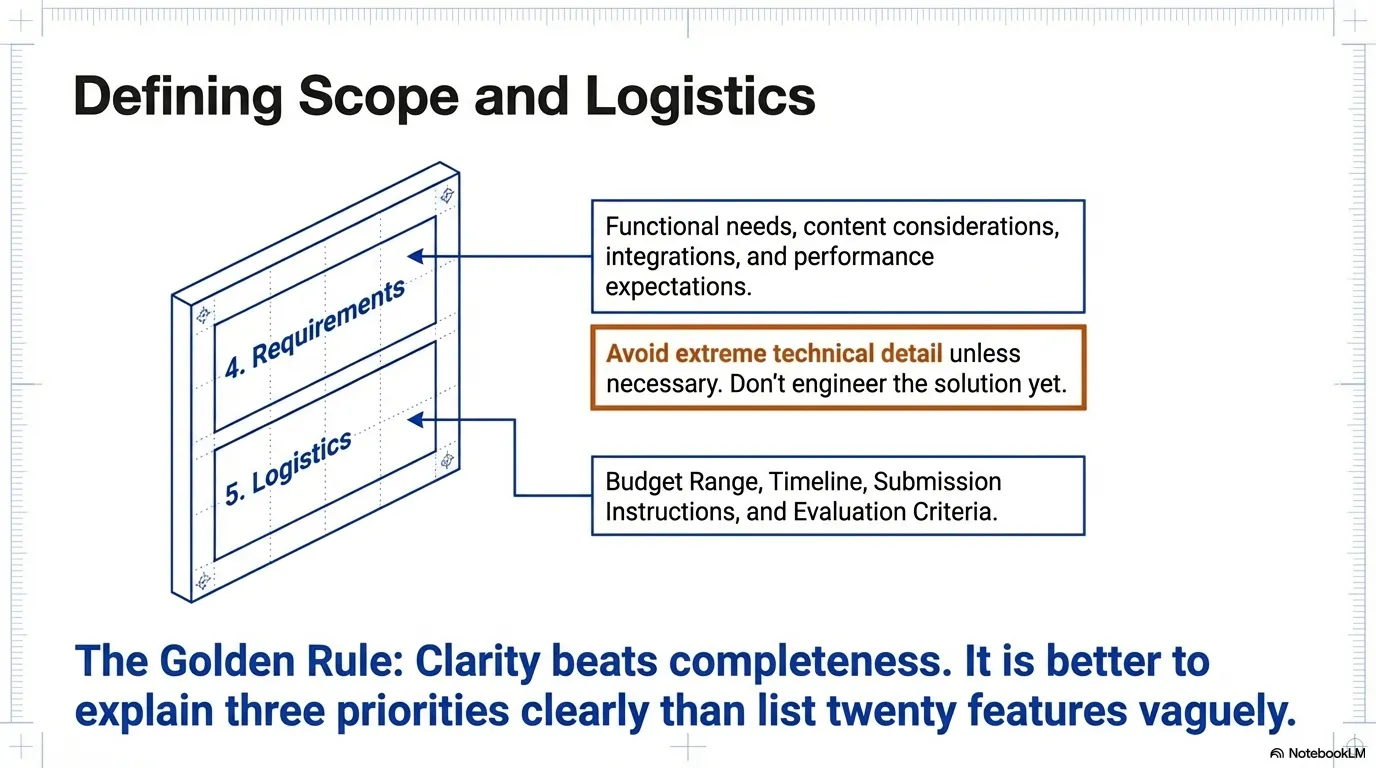
Requirements come next. This includes functional needs, content considerations, integrations, and performance expectations. This is not a place for extreme technical detail unless necessary, but it should be specific enough to prevent assumptions.
Finally, the RFP should clearly explain logistics: budget range, timeline, submission instructions, and evaluation criteria. Ambiguity in this section discourages strong vendors and attracts low-quality responses.
Writing the Website RFP Step by Step
The best website RFPs are not written in one sitting. They are built through a deliberate process.
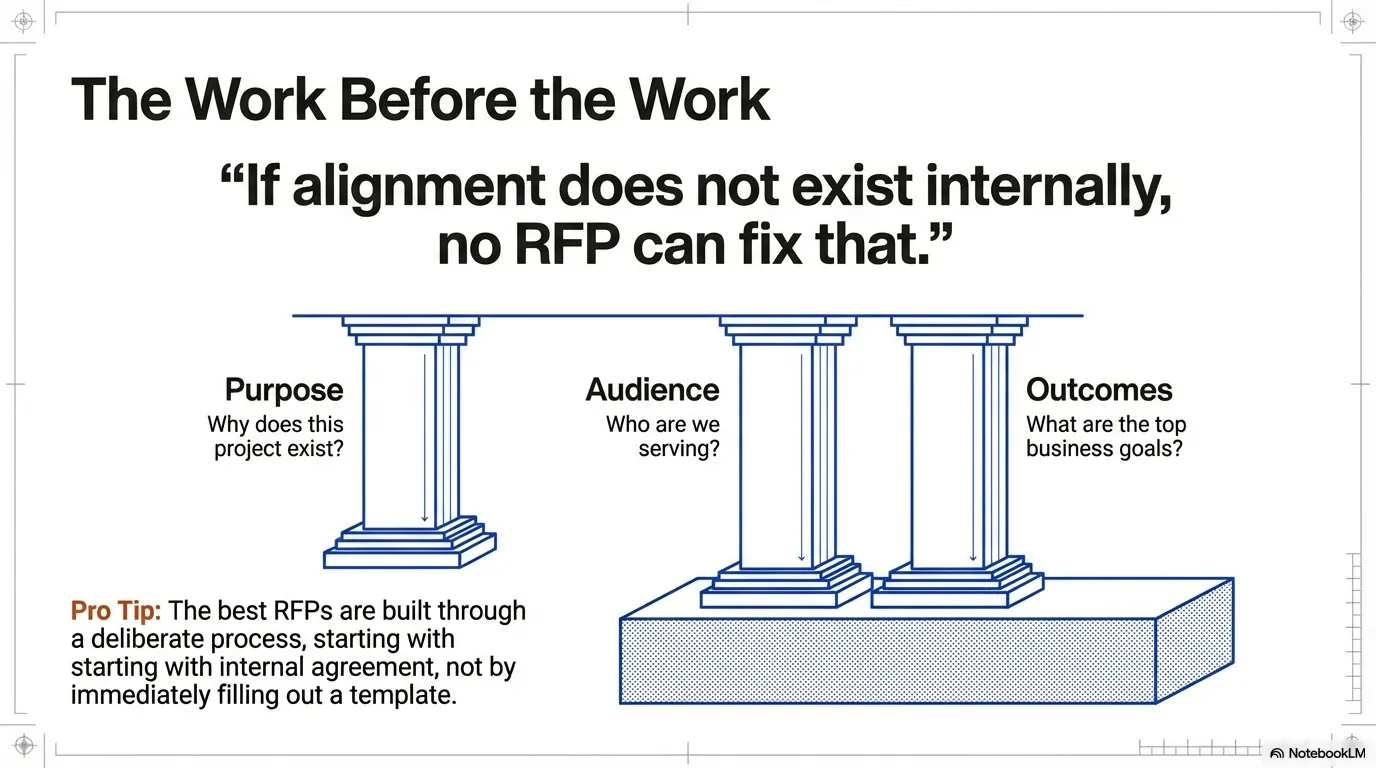
The first step is internal alignment. Before writing anything, stakeholders must agree on the purpose of the website, the primary audience, and the top business outcomes. If alignment does not exist internally, no RFP can fix that.
The second step is drafting the project narrative. This includes background, goals, and challenges. Write this in plain language. Overly polished corporate language hides real issues and leads to shallow proposals.
The third step is defining scope boundaries. This is where many RFPs fail. Listing features without context creates confusion. Instead, explain priorities. Vendors can work around constraints if they understand what truly matters.
The final step is review and refinement. Remove anything that does not help vendors propose better solutions. Every section should earn its place.
From experience, the strongest website RFPs are often shorter than expected, but far more precise.
Budget, Timeline, and Submission Requirements
Budget transparency is one of the most debated aspects of a website RFP. Many teams fear revealing budget will limit negotiation power. In reality, hiding budget wastes everyone’s time.
A budget range does not lock you into a number. It sets expectations. Vendors design solutions that fit within realistic constraints instead of guessing wildly. Without a budget range, proposals vary so widely they become impossible to compare.
Timelines should include both desired launch dates and internal dependencies. If content approval historically causes delays, say so. Vendors plan better when they understand real-world constraints.
Submission requirements should be simple and specific. Clearly state what you want included, how proposals should be delivered, and when questions are due. Overly complex submission rules signal bureaucracy rather than professionalism.
Best Practices That Get Better Proposals
The quality of proposals you receive is directly tied to the quality of your website RFP. Generic RFPs attract generic responses.
Clarity beats completeness. It is better to explain three priorities clearly than list twenty features vaguely. Vendors cannot solve problems they do not understand.
Honesty matters. If your current website underperforms, explain why you believe that is happening. If internal resources are limited, state it openly. The best partners appreciate transparency and plan accordingly.
Ask thoughtful questions instead of checkbox items. Questions about process, collaboration, and decision-making reveal far more about a vendor than lists of certifications.
In practice, the most impressive proposals come from vendors who feel respected by the RFP process. A clear, fair website RFP signals that respect.
Where to Post Your Website RFP for Maximum Reach
Where you distribute your website RFP affects who responds. Posting only on your website limits reach. Posting everywhere without strategy attracts noise.
Your own website and social channels are a good starting point. They attract partners already aligned with your brand. Industry-specific platforms and professional networks often yield higher-quality responses than general marketplaces.
Public procurement portals work well for government or regulated projects but may increase administrative overhead. Private companies often benefit more from targeted outreach combined with selective public posting.
The goal is not volume. The goal is relevance.
Website RFP Templates and Next Steps
Templates are useful starting points, not final solutions. A website RFP template provides structure, but customization determines effectiveness.
Use templates to ensure nothing critical is missing, then rewrite every section to reflect your actual situation. Vendors can tell immediately when an RFP has been copied without thought.
Once proposals are received, evaluate them against your stated criteria, not gut instinct alone. The RFP should guide decision-making, not disappear after submission.
A well-written website RFP continues to add value long after vendor selection. It becomes a reference point for scope, expectations, and accountability throughout the project.
A Real-World Website RFP Example (Experience-Based)
In one project I worked on, a mid-sized business skipped the RFP stage and hired a developer based on referrals alone. Six months later, the website launched late, over budget, and failed to support marketing goals. When we later created a website RFP for phase two, the process itself revealed misaligned assumptions that should have been addressed earlier.
The second phase succeeded not because the vendor was “better,” but because the website RFP forced clarity. That clarity changed everything.
Frequently Asked Questions About Website RFPs
What is the main purpose of a website RFP?
The primary purpose of a website RFP is to communicate project expectations clearly so vendors can propose relevant, realistic solutions. It reduces risk and improves alignment.
How long should a website RFP be?
There is no fixed length. Most effective website RFPs are detailed enough to explain goals and constraints clearly, without unnecessary filler. Quality matters more than page count.
Should startups use a website RFP?
Startups can benefit from a simplified website RFP when the project is business-critical. The structure helps prioritize needs even with limited resources.
Is it okay to reuse a website RFP template?
Templates are acceptable as a base, but every website RFP must be customized. Generic RFPs produce generic proposals.
How many vendors should receive a website RFP?
Typically, five to ten vendors is ideal. Fewer limits perspective; more becomes unmanageable and reduces proposal quality.
Final Thoughts on Website RFP Success
A website RFP is not paperwork. It is a strategic tool. When written with intent, it saves time, improves outcomes, and strengthens partnerships. When rushed or copied, it does the opposite.
If you want better proposals, start with a better website RFP. The document sets the tone for everything that follows.
For More Visits: Peak Media Consulting
Also Read: Website Development Process: A Complete, Real-World Guide From Concept to Growth